
Gathering Summary – Co-Creation and Participatory Arts

Conversation about co-creative practices in participatory arts, encompasses diverse perspectives on equality and inclusivity. At the ArtWorks Alliance members gathering, held on November 15, 2023, we discussed the vital role of co-creation and co-production in participatory arts, and asked what the benefit is of advocating for this time-consuming, resource intensive, and slippery approach to participatory arts practice?
The gathering was facilitated by Adrian Sinclair from Union Arts and was an opportunity for an exchange of ideas and experiences between ArtWorks Alliance members. Taking place on Zoom, we wanted to ensure we had participants from many locations around the UK. The choice of an online platform like Zoom is helpful because it facilitates broad participation and allows members to engage in some free-flowing critical discussions from their separate settings.
Here are the Mentimeter slides from the session: AWA-November-2023-Gathering-Slides
The focus of the gathering was on exploring and understanding the nuances of co-creative practices in participatory arts, with an emphasis on different aspects of equality, which give way to differences in value, opportunity, and outcome. The discussion was guided by Adrian through a structured agenda, with breakout sessions and interactive activities. We wanted to give participants the opportunity to delve deeply into each topic and share their insights and experiences.
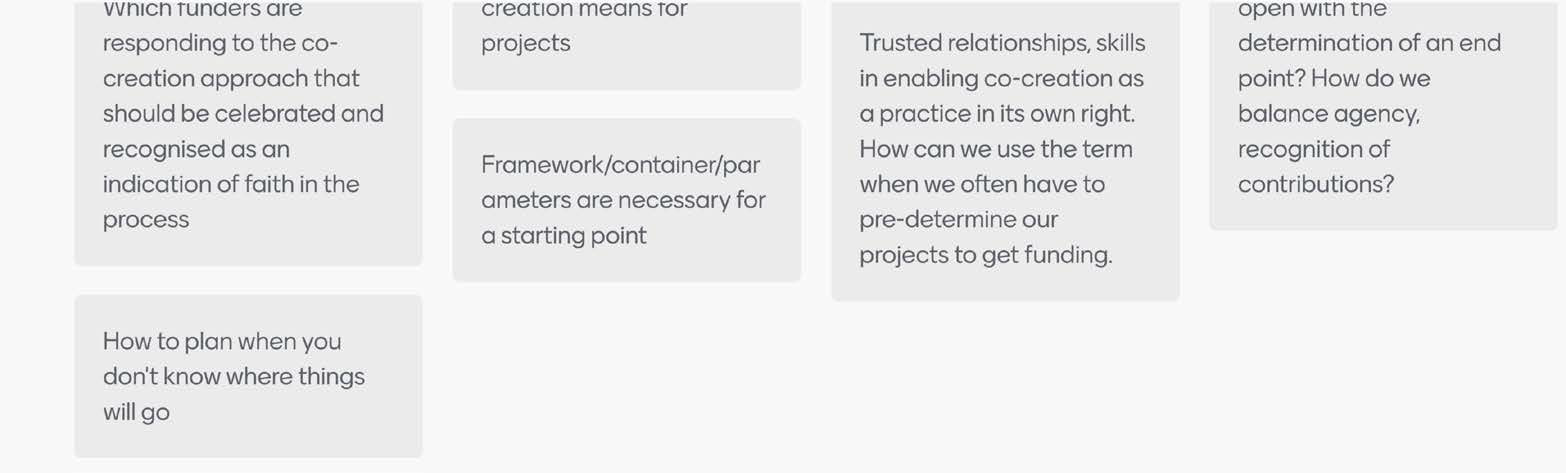


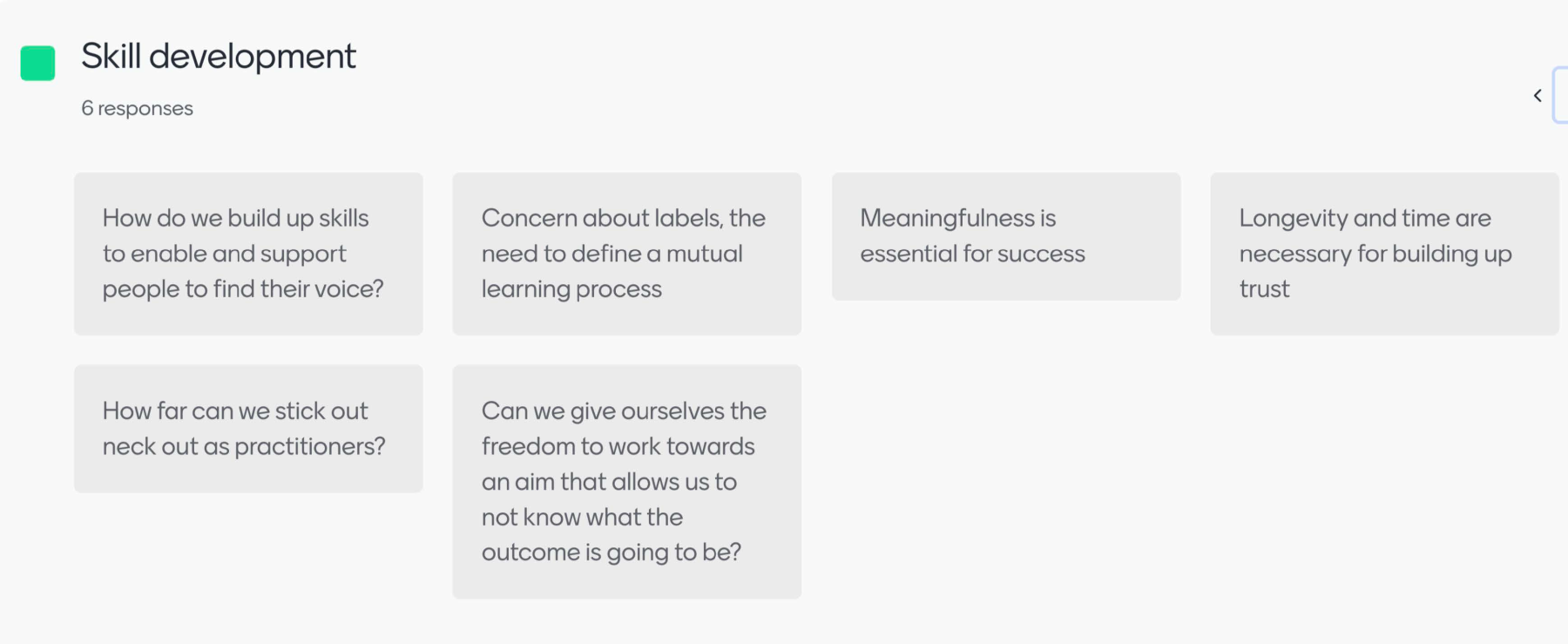

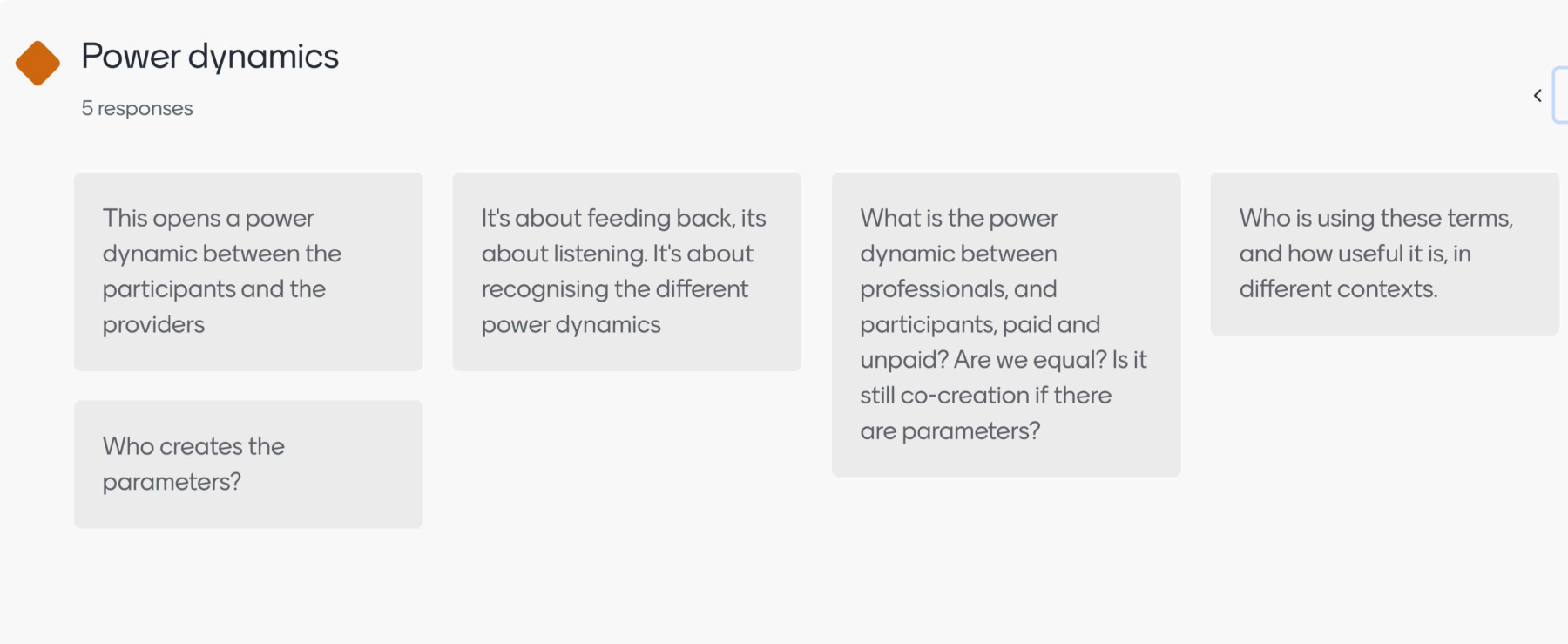
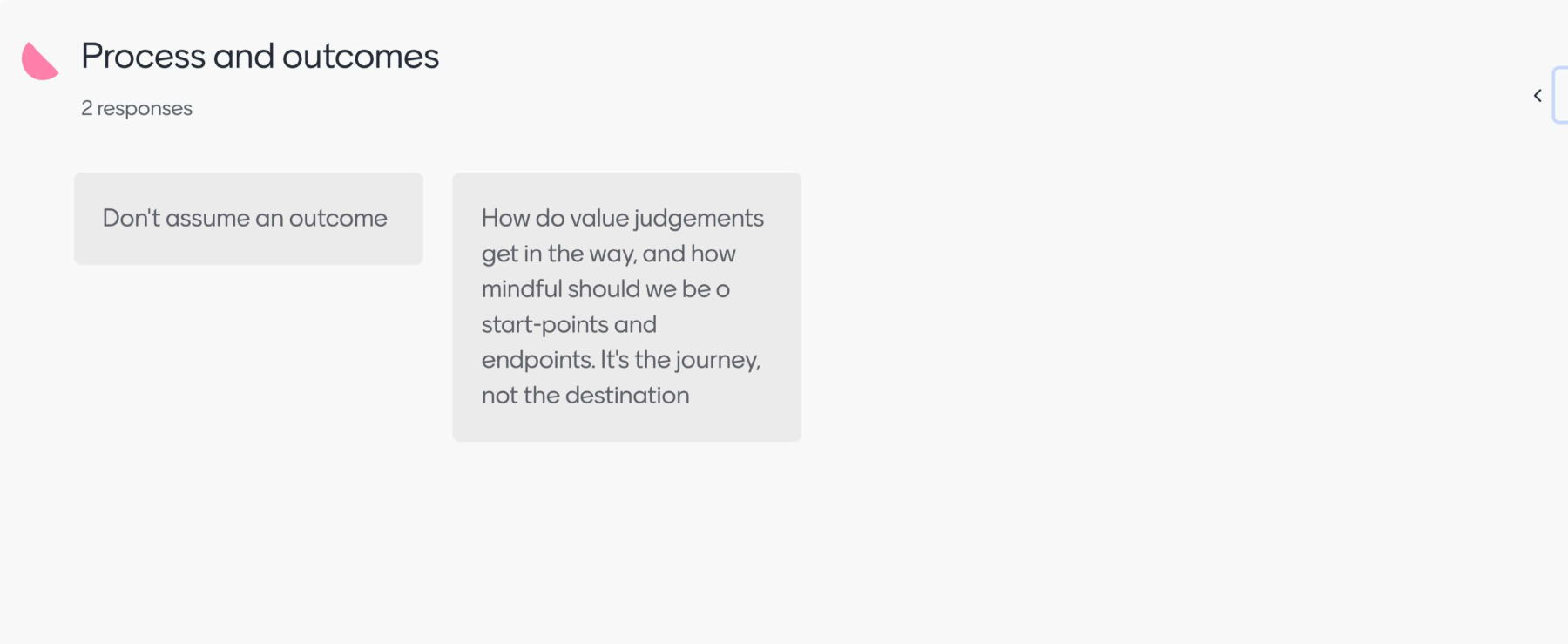
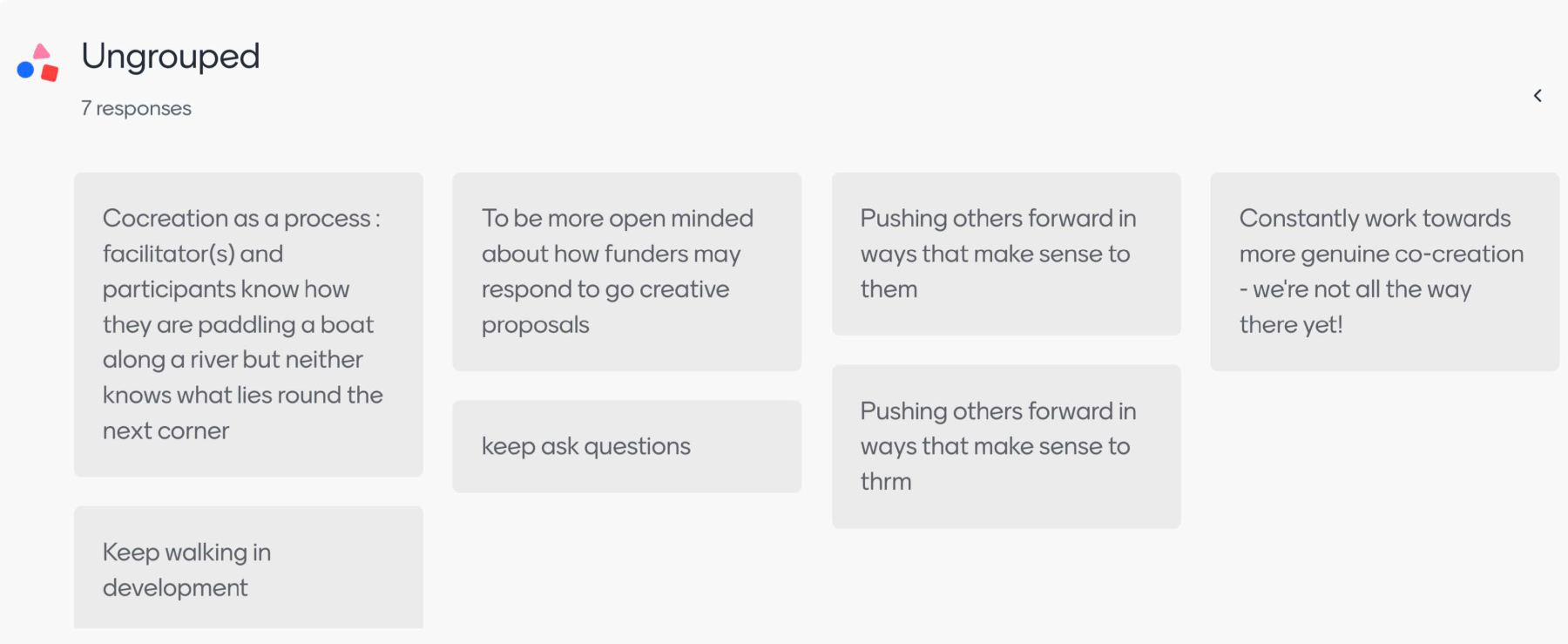
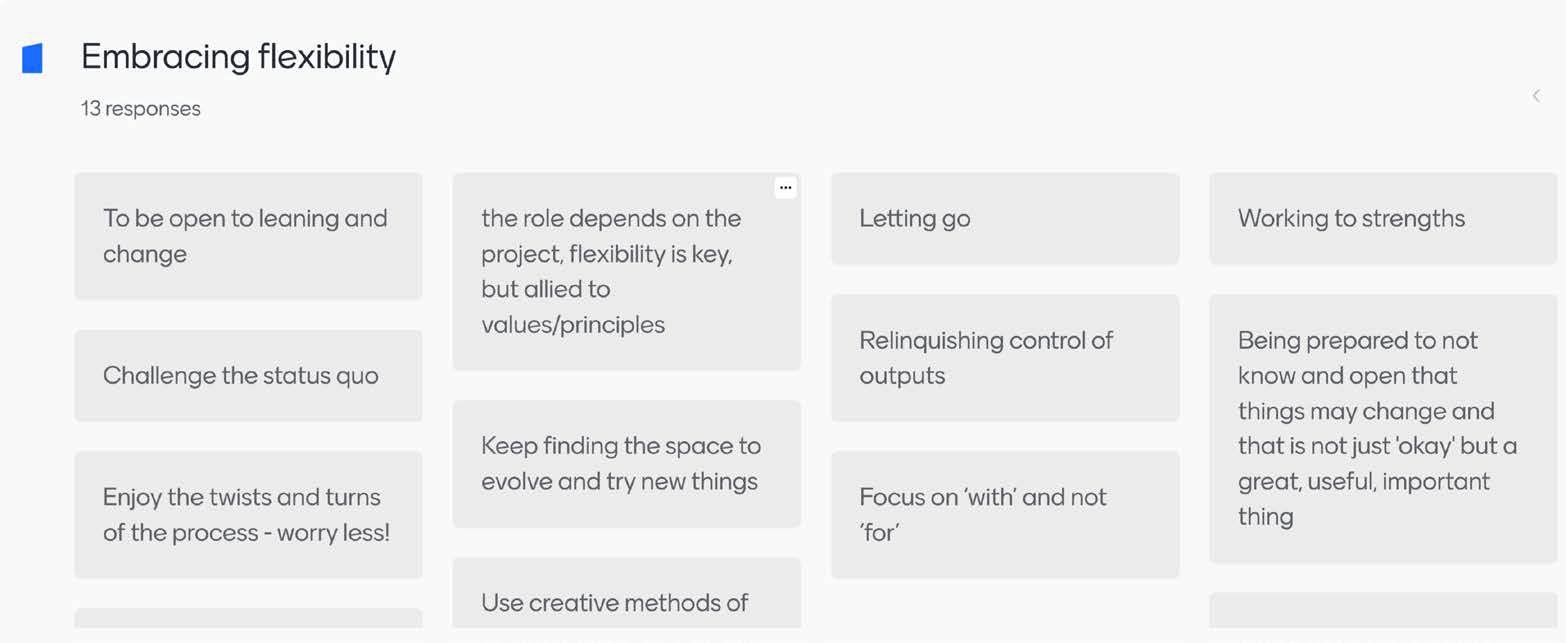

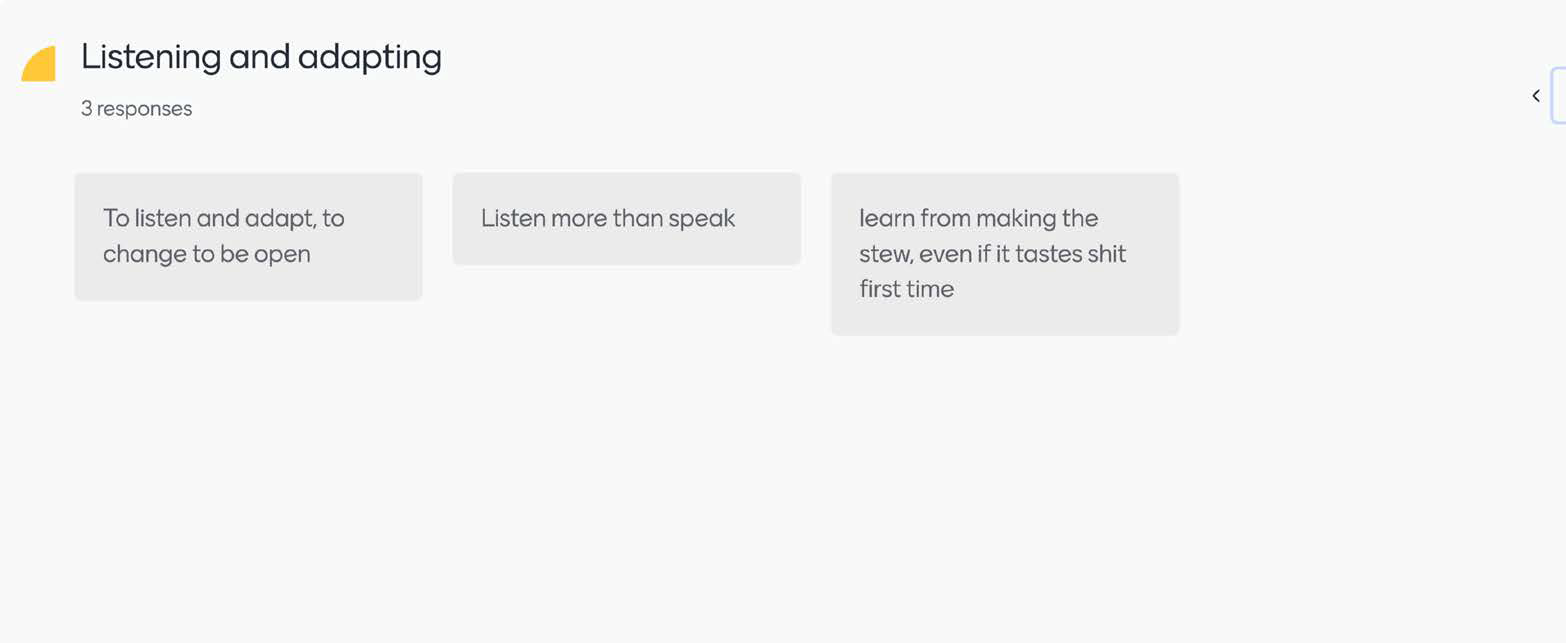

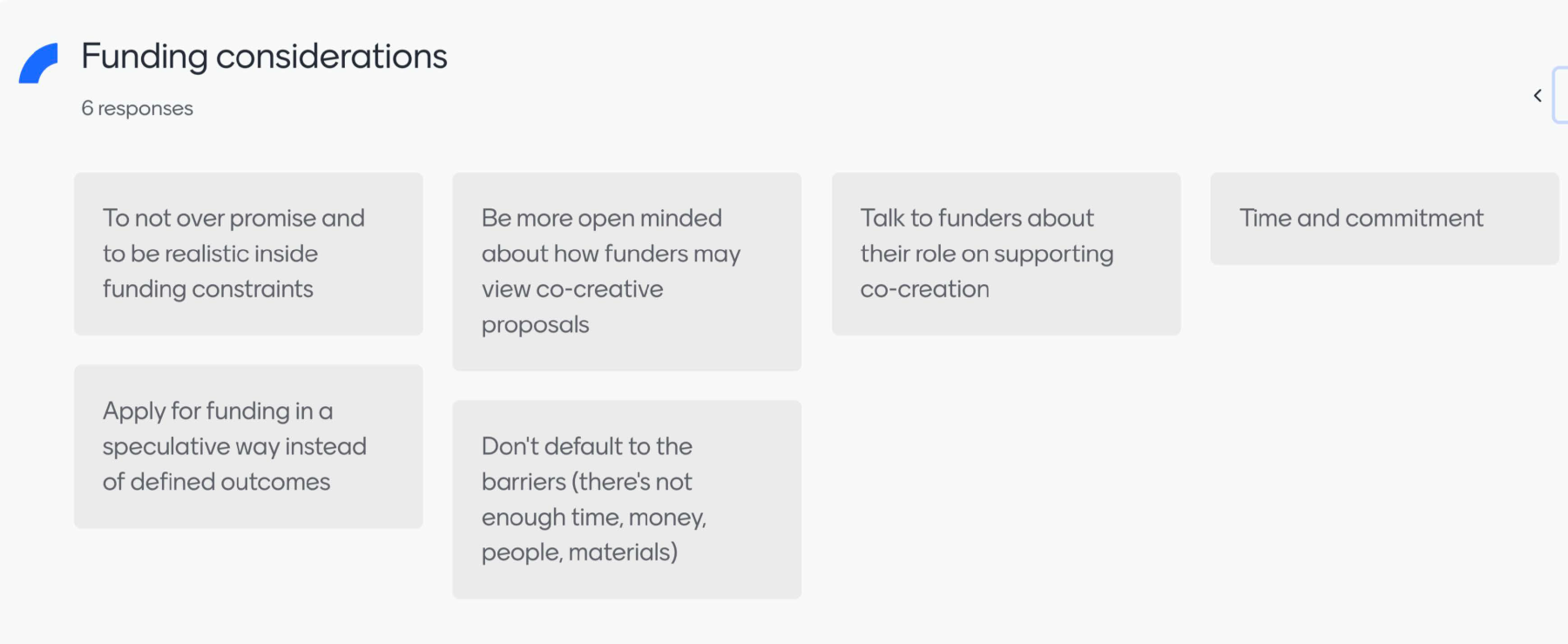

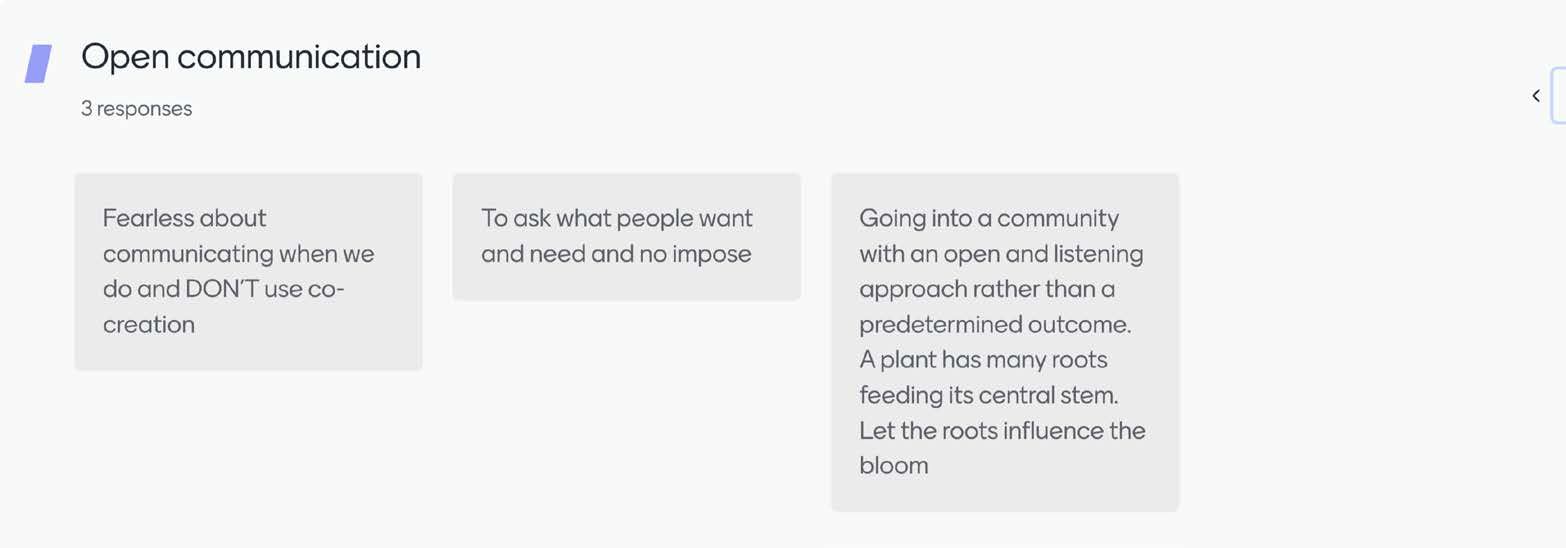

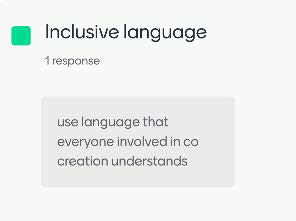

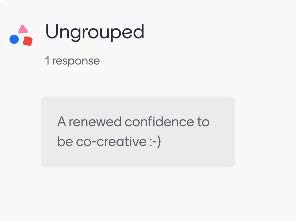
This virtual gathering served as an open platform for members of the ArtWorks Alliance to collaborate, reflect, and enhance their understanding and practice of co-creative and participatory arts. The event not only provided a forum for discussing theoretical aspects of participatory arts, but also addressed practical challenges and strategies, fostering a holistic approach to arts practice that is inclusive, equitable, and impactful.
Key Themes in Co-Creation
Co-creation, a fundamental aspect of participatory arts, involves complex dynamics of equality, inclusivity, and community engagement, making it essential to explore these themes in-depth. Participants in the gathering, coming from diverse backgrounds and experiences in the arts, were able to offer multilevel insights into these topics. Their contributions, shaped by a range of perspectives, from on-the-ground practitioners to policy influencers, enriched the dialogue, enabling a comprehensive exploration of co-creation.
This diversity of viewpoints was crucial in addressing the nuanced challenges and opportunities within co-creative practices, leading to a more profound and holistic understanding that can inform future activities in participatory arts. The gathering served not just as a discussion forum, but also as a collaborative space for collective learning and knowledge building, reflecting the very essence of co-creation it aimed to explore.
Key themes discussed include:
- The Importance of Time and Building Trust: Participants emphasised the need for working slowly and over extended periods to develop trusted relationships essential for successful co-creation.
- Relinquishing Control and Open-Ended Outcomes: There’s a focus on the importance of not having a fixed outcome in mind, allowing for more genuine collaborative processes.
- Professional Skills in Facilitating Co-Creation: The discussion acknowledged that facilitating co-creation requires specific skills and is a distinct practice, not just another form of community engagement or arts practice, but a fusion of the two.
- Challenges with Funding and Predetermined Projects: A significant challenge highlighted is the need to predefine projects for funding purposes, which can conflict with the open-ended nature of true co-creation.
- Power Dynamics and Equality: Concerns were raised about the power dynamics between professionals and participants, especially in contexts of paid and unpaid roles, and how to achieve equality in such settings.
- Creating Safe Spaces for Creativity: The importance of creating safe and inclusive environments where all participants feel empowered to contribute was emphasised.
- Barriers to Participation: Discussions include how to enable more collaboration, particularly in the development phase of a project, and the need to recognise and overcome barriers to participation, especially in vulnerable communities.
- Impact of Funding and Evaluation Metrics: The role of funders in the co-creation process, and the need for them to understand and adapt to the unique requirements of co-creative projects, including in project evaluation, was discussed.
Overall, the gathering was a reflective and critical discussion on the nuances, challenges, and potential of co-creation in arts and community projects, with a focus on how to make these processes more inclusive, equitable, and impactful.
Co-creation in Arts and Community Projects
By focussing on the integration and merging of community development mindsets with arts practice, many contributors recognised that as an integrated practice, linking both fields, there is significant potential for social impact. This emphasis stems from an understanding that combining the creative processes of the arts with community development initiatives can lead to more inclusive, empathetic, and transformative outcomes. The discussions were driven by a need to explore how artistic creativity can be harnessed, not just for aesthetic purposes, but as a tool for fostering community engagement, addressing social issues, and promoting participatory democracy.
By merging the experience of co-creators and active participants, with their varied experiences in both arts and community life, it’s possible to provide grounded insights into how these two fields can synergistically operate. The aim was to move beyond traditional boundaries of art for art’s sake and community development as a separate endeavour, instead moving towards a more integrated approach where each enriches and informs the other, leading to more meaningful and sustainable impacts in communities.
The key topics and themes include:
- Creative Approaches to Co-Creation: Many of the discussions explored creative ways to conceptualise co-creation, such as through models, recipes, and poems, emphasising the diversity and multidimensional nature of the concept.
- Challenges in Resource Allocation and Funding: There was a discussion on how resource constraints, particularly short-term funding, affect co-creative projects. Ideas like reallocating larger funds into multiple smaller grants to encourage community involvement were explored.
- Importance of Time and Deep Relationships: The significance of time in building meaningful relationships and creating impactful work was reiterated.
- Power Dynamics and Inclusivity: The conversations touched on the importance of addressing power dynamics in co-creation, ensuring inclusivity and equality among participants.
- Flexible Models and Toolkits for Co-Creation: The need for flexible and adaptable models or toolkits that can cater to diverse contexts and requirements in co-creation projects was highlighted.
- Overcoming Barriers to Participation: There was an ongoing conversation about recognising and overcoming barriers to participation, particularly in community-based projects.
- The Role of Failure in the Creative Process: Acknowledging and learning from failures was seen as an integral part of the co-creative process, with metaphors like a ‘co-creation stew’ being used to illustrate this point.
- Reflecting on Personal Roles in Co-Creation: Participants were encouraged to reflect on their roles and contributions within co-creative practices, emphasising the importance of personal growth and development in this context.
Any deep dive into the nuances of co-creation in arts and community projects, has to be able to explore many different and emergent creative metaphors and practical challenges, while emphasising the need for adaptable and inclusive approaches.
Defining Co-Creation
Co-creation in participatory arts practice is a collaborative and dynamic process that involves the active engagement of artists and community members working together to generate creative outcomes. This definition underscores the importance of having clear and shared understandings of what co-creation entails. It necessitates contributions from all participants, valuing diverse perspectives and skills, and fostering a shared sense of ownership and agency. Addressing challenges is integral to co-creation, requiring flexibility, adaptability, and problem-solving skills, while also foregrounding examples of successful co-creation helps in providing tangible models for others to learn from and emulate.
Providing space for critical reflections is crucial, as it allows participants to consider the efficacy and impact of their collaborative efforts, leading to continuous improvement and more profound engagement. By modelling the co-creation process, we can work with guides that support participants in understanding the dynamics and complexities of collaborative art-making. For example, by developing ‘recipes’ for co-creation — metaphorical guidelines or frameworks — it’s possible to aid practitioners in conceptualising and implementing effective co-creative strategies.
Being part of a Co-Creating Change Network, then, is desirable, as it fosters a community of practice, encouraging knowledge sharing and collective growth. Agreeing on fundamental principles, such as inclusivity, respect, and equality, ensures that the co-creative process aligns with broader ethical and social values. Lastly, incorporating personal experiences and reflections enriches the co-creative practice, bringing authenticity and depth to the collaborative process and ensuring that it remains a relevant and responsive approach in participatory arts.
If we aim to enrich the social understanding of people within our communities, the benefit of participatory forms of co-production in the arts, can be guided by asking a apposite set of questions for people involved in participatory arts practices, particularly in the context of co-creation, as follows:
Defining Co-Creation:
- What does co-creation mean to both artists and contributors in the context of participatory arts?
- How do we differentiate co-creation from other collaborative processes, like co-design or co-production?
Building Relationships:
- What strategies can we use to build trust and meaningful relationships in co-creative projects?
- How can we balance power dynamics to ensure equality and inclusivity among all participants?
Challenges and Solutions:
- What are the most significant challenges we face in co-creative arts projects, and how do we address them?
- How do resource limitations (like time and funding) impact our co-creative practices, and how do we navigate these constraints?
Impact and Measurement:
- How do we measure the impact of co-creative projects on participants and the wider community?
- What indicators should we use to evaluate the success of a co-creative process?
Role of Funders and Policymakers:
- What role should funders and policymakers play in supporting co-creative arts practices?
- How can funding models be adapted to better support the unique aspects of co-creative work?
Reflection and Learning:
- How can we incorporate reflection and learning from both successful and less successful co-creative experiences?
- What practices do we have in place for ongoing learning and development in co-creation?
Community Engagement:
- How can we ensure genuine and meaningful community engagement in co-creative projects?
- What methods can we use to identify and overcome barriers to participation, especially in vulnerable or marginalised communities?
Sustainability and Legacy:
- How can we ensure the sustainability and legacy of co-creative projects within communities?
- What strategies should we employ to maintain engagement and momentum post-project?
Ethical Considerations:
- What ethical considerations are important in co-creative arts practices?
- How should we manage and respect diverse perspectives and experiences in co-creative projects?
Future of Co-Creation:
- What do we envision as the future of co-creative practices in participatory arts?
- How can the principles of co-creation be more widely integrated into arts and community projects?
Emergent Questions
These questions emerged from the conversation and can be used to provoke deep thinking and discussion among practitioners, funders, and participants in the field of participatory arts. They aim to foster a richer understanding of co-creative practices and their potential social impact. Based on the discussions from gathering, a working definition of co-creative practice in the context of participatory arts can be summarised as follows:
Co-creative practice in participatory arts is a collaborative and inclusive process where artists and community members work together as equal partners in the creative process. It is characterised by shared decision-making, mutual learning, and a deep respect for the diverse skills and perspectives each participant brings. In co-creation, the emphasis is on the journey of making, rather than just the end product. This approach nurtures trust and builds meaningful relationships, and often results in more innovative and relevant artistic outcomes.
To summarise, co-creative practice in participatory arts is a comprehensive approach that prioritises equality and inclusivity, ensuring that all participants, regardless of background or skill level, are valued equally and have an equal voice in the creative process. This practice is grounded in shared decision-making, where mutual learning and respect are central tenets, acknowledging the unique contributions and perspectives of each participant. Co-creation is inherently process-oriented, focusing on the journey of creation rather than just the final product, thereby fostering a deeper engagement and understanding among collaborators. Flexibility and adaptability are key characteristics of this practice, allowing the process to respond to the evolving needs and ideas of the participants. The formation of sustainable relationships is another critical aspect, as it ensures the longevity and ongoing impact of the collaborative effort. Lastly, co-creative practice is deeply rooted in the desire to make a positive community impact, aiming to not only produce artistic outcomes but also to facilitate social change and community development through the power of collective creativity and shared experiences.
This definition encapsulates a practice that is deeply collaborative, respectful of diversity, and focused on both the artistic process and its impact on communities. Co-creative practice in participatory arts is not just a method of producing art; it is a transformative process that fosters personal growth, community engagement, and social change.
But the conceptual and practical journey isn’t finished. In participatory arts, the concept of equality itself is multifaceted, encompassing ‘equality of value’, ‘equality of opportunity’, and ‘equality of outcome’. Each of these represents a distinct approach to defining and implementing equality and inclusivity in both policy and practice, and understanding their differences is crucial for effective and meaningful participatory arts projects. As was discussed in the gathering, we need multiple perspective from which we can form our views of the practice of participatory co-creation:
“Whether it’s a triangle of the people involved in the project or a triangle of the beginning, the middle, and the end of the process. And that always co-creation is better if we look at it from three perspectives or more. This would be inclusive and co-productive.”
Equality of Value: This concept emphasises the inherent worth and respect for each participant’s contribution, regardless of their skill level, background, or role in the project. In practice, it means valuing diverse perspectives, experiences, and forms of expression equally. It challenges hierarchical structures in the arts, advocating for a culture where everyone’s input is seen as valuable and influential. Policy implications include creating frameworks that actively recognise and celebrate diverse contributions, fostering an environment where every voice is heard and respected.
Equality of Opportunity: This aspect focuses on ensuring that all individuals have equal access to participate in arts projects. It addresses barriers to participation, such as socio-economic factors, physical accessibility, or cultural inclusivity. In practice, it involves proactive measures to identify and dismantle these barriers, creating an accessible and welcoming environment for all. Policies under this concept would include outreach initiatives, accessibility accommodations, and targeted support for underrepresented groups, ensuring that everyone has a fair chance to engage in the arts.
Equality of Outcome: This concept aims at achieving equitable results for all participants. It recognises that simply providing equal opportunity does not always lead to equal results due to systemic inequalities. In practice, equality of outcome might involve additional support, resources, or adjustments to ensure that all participants can take part and benefit proportionately from the experience. Policies in this regard would focus on monitoring and evaluating the impacts of arts projects, adjusting strategies to ensure equitable benefits, and addressing any disparities in the outcomes for different groups.
In participatory arts projects, these different facets of equality must be understood as a set of choices that significantly affect both policy and practice. It is not enough to address one aspect without considering the others. A comprehensive approach that integrates equality of value, opportunity, and outcome is essential for fostering truly inclusive, equitable, and impactful participatory arts practices. This holistic view of equality ensures that participatory arts engage diverse communities and empower them and address broader social inequalities.
Hopefully, by hosting the gathering, and providing a space for deliberation and examination of issues related to co-creative practice in participatory arts, members directly benefit by taking part in the ArtWorks Alliance network. These discussions enable members to navigate through the complex and competing claims and challenges inherent in co-creative processes. By facilitating open discussions, sharing of experiences, and exploration of innovative approaches, the gathering hopefully served as a valuable platform for learning and collaboration.
Members benefit from the collective wisdom and diverse perspectives presented, which, we hope, will help them find effective pathways in their own co-creative endeavour’s. Engaging with peers who have prior experience or have adopted innovative approaches in participatory arts, provides an opportunity for knowledge exchange and inspiration. This interaction not only broadens an individual’s understanding, but also equips us all with practical insights and strategies to enhance our practice.
Moreover, if the gathering fosters a sense of community and support among the members, then we have achieved one of our co-creative aims. A sense of community is vital in fields like participatory arts, that often involve navigating uncharted and challenging territories. The connections formed during gatherings, we hope, can lead to future collaborations and shared projects, further enriching the network’s collective expertise and impact. Ultimately, these gatherings empower members to approach their work in more informed, creative, and effective ways, contributing to the advancement and sustainability of co-creative practices in participatory arts.


